

Wat zijn ESG-data?
ESG-data zijn informatie over het gedrag van een bedrijf op het gebied van milieu, maatschappij en bestuur: uitstoot en vervuiling, arbeidsomstandigheden en mensenrechten, corruptie en naleving van wet- en regelgeving. Duurzaamheidsteams gebruiken ze voor rapportage, inkoop voor leveranciersbeslissingen en risicoteams om de organisatie te beschermen tegen betrokkenheid bij misstanden die zij niet zien aankomen.
Waarom de meeste ESG-data alleen de oppervlakte beslaan
De ESG-data waarop de meeste organisaties vertrouwen, komen uit twee bronnen, en beide hebben dezelfde blinde vlek:
Wat bedrijven zelf rapporteren. Duurzaamheidsverslagen, CSRD/ESRS-datapunten en antwoorden op vragenlijsten zijn gestructureerd en vergelijkbaar, maar ze zijn zelfgerapporteerd en worden hooguit eens per jaar bijgewerkt. Geen enkel bedrijf rapporteert de controverse waarvan het hoopt dat die lokaal blijft.
Wat ratings dekken. ESG-ratings en -scores zijn nuttig om grote, beursgenoteerde bedrijven te vergelijken, want dat is de groep die ratingbureaus dekken. Lijsten met de belangrijkste aanbieders van ESG-data bestaan vooral uit ratings en op rapportage gebaseerde ESG-datasets, en hun dekking weerspiegelt dat: het gemiddelde leveranciersbestand van een Europese onderneming zit vol met particuliere, niet-beursgenoteerde, kleine en middelgrote bedrijven waarvan geen enkel ratingbureau de ESG-prestaties bijhoudt.
Het resultaat is een oppervlakkige laag ESG-data die compleet lijkt, maar dat niet is. De risico's die reputaties schaden en gevolgen vanuit de toezichthouder met zich meebrengen (het vervuilingsincident, de kinderarbeidzaak in de toeleveringsketen, het corruptieonderzoek bij een distributeur) komen eerst in het nieuws naar boven, meestal in de lokale taal van de markt waar ze spelen, en vaak bij bedrijven die te klein zijn om überhaupt een rating te hebben. Om onder de oppervlakte te kijken is een ander soort ESG-databron nodig: systematische, wereldwijde monitoring van adverse media.
ESG-regels in de EU: wat is er veranderd
De EU heeft haar duurzaamheidskader begin 2026 bijgesteld, en de wijzigingen werken twee kanten op tegelijk:
Minder bedrijven moeten rapporteren. De Omnibus I-richtlijn, van kracht sinds 18 maart 2026, beperkt de verplichte CSRD-rapportage tot bedrijven met meer dan 1.000 werknemers en een netto-omzet van meer dan 450 miljoen euro, en een vereenvoudigde set ESRS met veel minder datapunten wordt afgerond. De CSDDD blijft bestaan met een beperkter toepassingsgebied (5.000+ werknemers, 1,5 miljard euro omzet, van toepassing vanaf 2029), maar de kernverplichting blijft overeind: risicogebaseerde due diligence op het gebied van mensenrechten en milieu in de hele waardeketen.
Het risico werd niet kleiner met het toepassingsgebied. Bedrijven buiten de verplichte reikwijdte merken de verwachtingen nog steeds via klantcontracten en verzoeken uit de waardeketen. En onder de Europese antiwitwaswetgeving is milieucriminaliteit een gronddelict voor witwassen, waardoor een milieucontroverse bij een tegenpartij niet alleen een reputatiekwestie wordt, maar ook een vraagstuk van financieel-economisch criminaliteitsrisico.
De praktische richting voor het rapporteren en verzamelen van ESG-data is in beide gevallen dezelfde: minder uitputtend vakjes afvinken, meer gerichte, risicogebaseerde onderbouwing van wat er werkelijk speelt bij de bedrijven waarmee u samenwerkt.
Waar ESG-screening werkelijk naar zoekt
ESG-screening betekent dat de bedrijven in uw portefeuille of toeleveringsketen worden gemonitord op signalen uit de praktijk over de volledige breedte van milieu-, sociale en bestuursrisico's. Concreet gaat het om categorieën als:
- Milieu: vervuiling, milieuschade, illegale afvalverwerking, ontbossing en handhavingsmaatregelen op milieugebied
- Sociaal: kinderarbeid, dwangarbeid, mensenrechtenschendingen, veiligheidsincidenten op de werkvloer en arbeidsuitbuiting
- Bestuur: corruptie, omkoping, fraude en wangedrag van bestuurders en eigenaren
Drie eigenschappen bepalen of screening onder de oppervlakte komt:
Diepgang van de bronnen. Wereldwijde persbureaus melden wat al groot is. Het signaal begint kleiner: regionale en gespecialiseerde kranten, vakpers en media in de lokale taal. Business Radar screent dagelijks meer dan 17 miljoen bronnen wereldwijd, waaronder meer dan 100.000 gevalideerde nieuwsbronnen, juist omdat de eerste vermelding van een vervuilingszaak of een arbeidsovertreding zelden in de internationale pers staat.
Dekking van niet-beursgenoteerde bedrijven. Omdat het signaal uit het nieuws komt en niet uit rapportages of ratings, valt elk bedrijf dat wordt genoemd binnen de dekking, inclusief de particuliere, niet-beursgenoteerde en kleinere bedrijven die het merendeel van reële leveranciersbestanden uitmaken en die geen enkele ratingaanbieder volgt.
Context van eigendom. Een ESG-controverse twee eigendomslagen verderop is nog steeds uw risico. Bedrijfsstructuurgegevens en UBO-gegevens (via het partnerschap met Dun & Bradstreet) verbinden signalen bij moeder- en dochterondernemingen en gelieerde entiteiten met de tegenpartij die u daadwerkelijk monitort.
Diepgang op uw voorwaarden
Niet elke organisatie heeft dezelfde diepgang aan ESG-informatie nodig, en een screeningopzet die daaraan voorbijgaat levert ofwel blinde vlekken ofwel meldingsmoeheid op. Hoe u ESG-data verzamelt in een grote portefeuille is uiteindelijk een kwestie van risicobereidheid, niet van de standaardinstellingen van uw tool, en goede governance van ESG-data betekent dat u kunt laten zien waarom u monitort wat u monitort.
Business Radar is rond die keuze gebouwd: organisaties bepalen zelf welke van de 210+ risicocategorieën zij monitoren, met welke diepgang en voor welke delen van de portefeuille, waarbij alles is ondergebracht in één continu bijgewerkte ESG-database in plaats van verspreid over losse oplossingen. Een inkoopteam kan een breed leveranciersbestand alleen volgen op ernstige milieu- en sociale categorieën, terwijl een risicoteam de volledige set categorieën toepast op tegenpartijen met een hoog risico. De materialiteitsmarkering controleert vervolgens of een gebeurtenis een wezenlijke materiële impact heeft op de gemonitorde entiteit, zodat een analist een signaal bereikt en niet slechts een krantenkop. En elk signaal is verklaarbaar, voorzien van een tijdstempel en gekoppeld aan de bron, zodat conclusies altijd terug te voeren zijn op de onderliggende berichtgeving.
Hoe Business Radar helpt bij ESG-screening
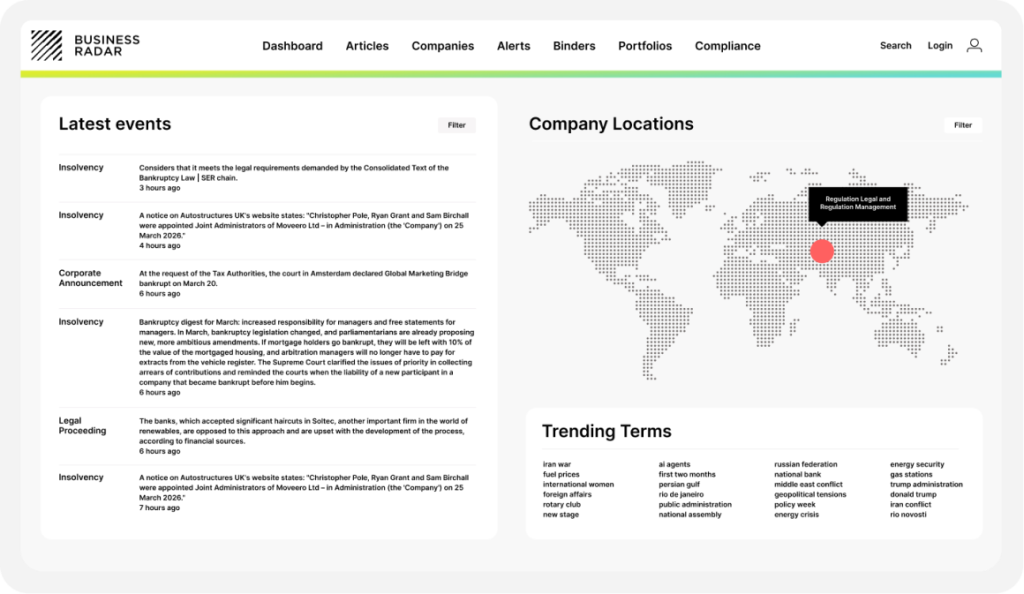
Voor ESG vormt adverse media de kern van wat Business Radar doet. Het platform zet het wereldnieuws, inclusief de regionale en gespecialiseerde media waar ESG-risico's het eerst opduiken, om in gestructureerde, gevalideerde ESG-data over milieu-, sociale en bestuurscategorieën, van vervuiling tot kinderarbeid, wereldwijd. Portefeuilles van elke omvang worden geüpload via Excel of CSV, en integratie van ESG-data via de API levert signalen rechtstreeks in de systemen waar beslissingen worden genomen. Bedrijfsstructuur- en UBO-gegevens verbinden risico's via de eigendomsketen, en elke organisatie bepaalt zelf welke categorieën en welke diepgang bij haar risicobereidheid passen. In de praktijk vinden 9 van de 10 teams kritieke risico's die met verouderde screening volledig werden gemist, en gebruikers melden een gemiddelde efficiëntieverbetering van 32% ten opzichte van traditionele screeningtools.
Veelgestelde vragen
Wat zijn ESG-data? ESG-data zijn informatie over het gedrag van een bedrijf op het gebied van milieu, maatschappij en bestuur, gebruikt voor duurzaamheidsrapportage, leveranciersbeslissingen en risicobeheer.
Wat zijn de belangrijkste bronnen van ESG-data? Rapportages van bedrijven, ESG-ratings en externe signalen zoals adverse media. Rapportages en ratings dekken vooral grote, beursgenoteerde bedrijven; adverse media dekt ook niet-beursgenoteerde en kleinere bedrijven en brengt risico's doorgaans het snelst aan het licht.
Wie moet na de Omnibus ESG-data rapporteren onder de CSRD? Sinds maart 2026 geldt de verplichte CSRD-rapportage voor bedrijven met meer dan 1.000 werknemers en een netto-omzet van meer dan 450 miljoen euro. Verwachtingen uit de waardeketen bereiken kleinere bedrijven nog steeds via verzoeken van klanten.
Wat is ESG-screening? ESG-screening is het doorlopend monitoren van bedrijven op reële risicosignalen op het gebied van milieu, maatschappij en bestuur, zoals vervuiling, kinderarbeid of corruptie, afkomstig uit nieuws en andere externe bronnen in plaats van uit zelfgerapporteerde gegevens.
Hoe vind ik de ESG-score van een bedrijf? Voor grote beursgenoteerde bedrijven publiceren ratingaanbieders scores, al lopen de methodologieën sterk uiteen. Voor de niet-beursgenoteerde en kleinere bedrijven die het merendeel van leveranciersbestanden uitmaken bestaat geen score; het praktische alternatief is het screenen van externe bronnen zoals adverse media op feitelijke ESG-risicosignalen.