

Supply chain due diligence at the scale it demands

The Corporate Sustainability Due Diligence Directive requires continuous, documented oversight of your entire supply chain. Business Radar gives compliance teams the intelligence and audit infrastructure to meet that obligation — and evidence it.

100K

Validated news sources across global, local & sector-specific outlets

210+

Predefined risk categories covering human rights, environment & governance

350

Global sanctions and enforcement lists screened continuously

D&B

UBO and corporate linkage data via Dun & Bradstreet and global registries

Monitoring that keeps pace with CSDDD

Continuous monitoring

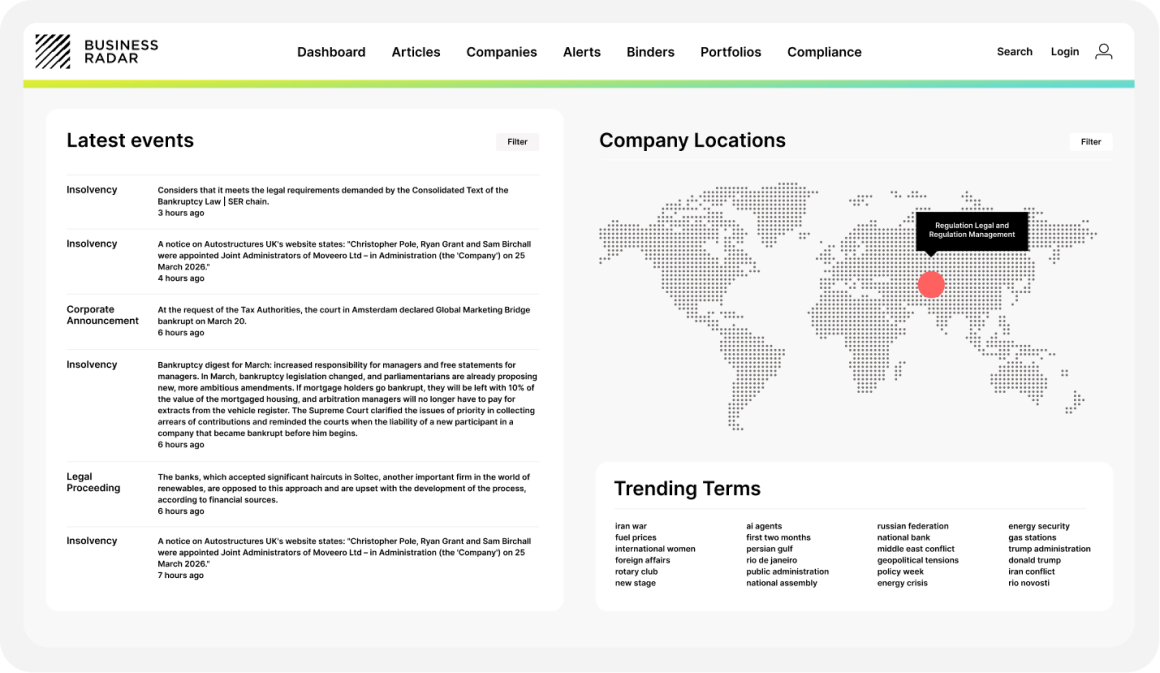
Know when something changes not at your next scheduled review

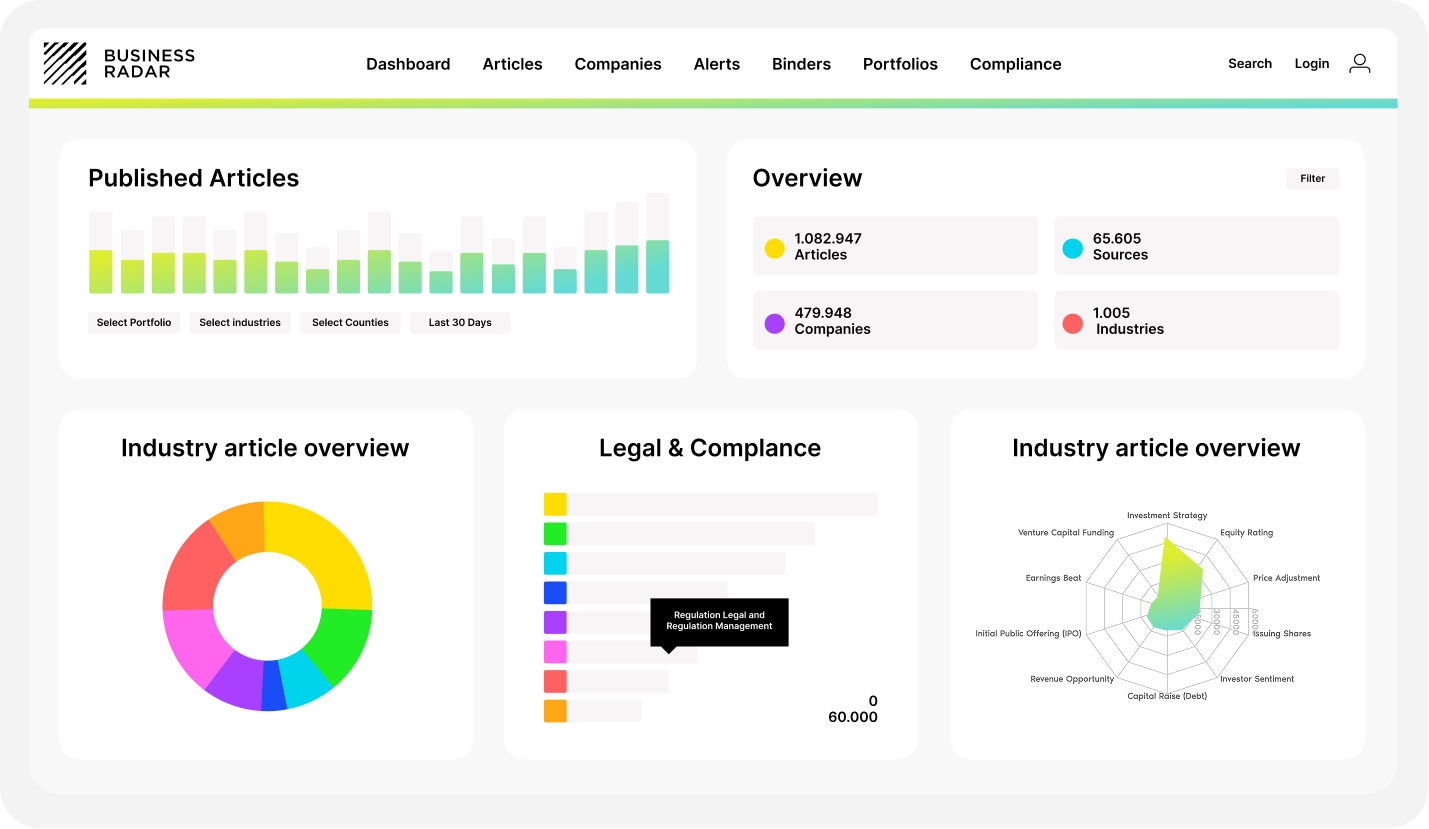
CSDDD requires a live, risk-based programme across your operations, subsidiaries, and business partners. Business Radar monitors your entire partner portfolio in real time, surfacing adverse events as they happen with alerts via email or API.

  • Real-time monitoring with ongoing rescreening across your full portfolio
  • Alerts triggered by detected events, not manual checks
  • 210+ risk categories covering the adverse impacts CSDDD targets
Know when something changes not at your next scheduled review
Entity intelligence

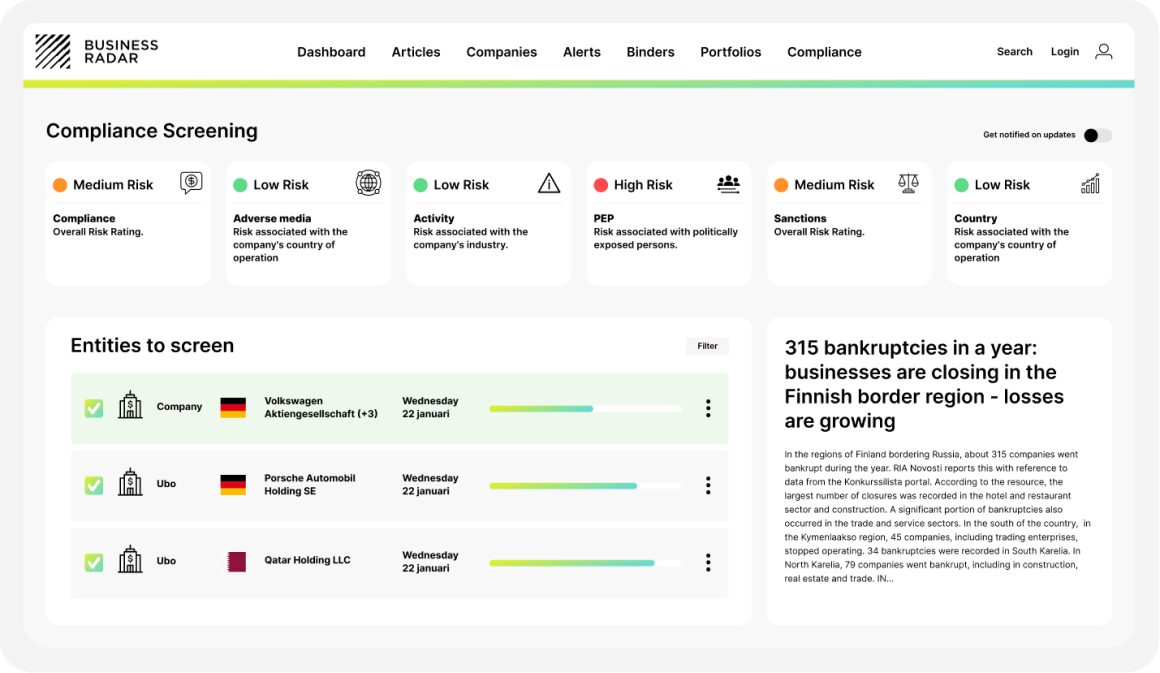
See beyond your direct partners map risk through the ownership chain

CSDDD extends obligations to subsidiaries and group-level relationships. Business Radar's corporate linkage data and UBO intelligence give you structured visibility into who you're actually doing business with and where the risk sits.

  • Corporate linkages and subsidiary mapping via Dun & Bradstreet
  • UBO data and global ultimate ownership visibility
  • Mass entity import via DUNS numbers and company registration identifiers
See beyond your direct partners map risk through the ownership chain
Audit-ready documentation

Every decision documented. Every source traceable.

When regulators or auditors review your CSDDD programme, they will ask what you found, when you found it, and what you did next. Business Radar's full audit trail captures every step from screening timestamp to analyst decision with direct links to the underlying source.

  • Full audit trail: timestamps, source data, risk classification, user decisions
  • Exportable reports for internal documentation and regulatory submissions
  • Case handling and investigation workflows for cross-team collaboration
Every decision documented. Every source traceable.

Related national frameworks

CSDDD builds on supply chain laws already in force across Europe. These apply now — independently of the CSDDD timeline.

  • German Supply Chain Act (LkSG)

    In force since 2023 for companies with 1,000+ employees in Germany. Requires annual risk analyses, preventive measures, and a complaints mechanism. Applies independently until Germany confirms alignment with CSDDD scope.

  • French Duty of Vigilance

    Applies to companies with 5,000+ employees in France or 10,000+ globally. Requires a published annual Vigilance Plan covering risk mapping, supplier assessment, and a monitoring scheme.

  • UK Modern Slavery Act

    Applies to any company operating in the UK with global turnover above £36M. Requires an annual statement on steps taken to ensure modern slavery is not present in supply chains or operations.

See how we fit your CSDDD programme

Whether you're building due diligence infrastructure from scratch or stress-testing what you already have, our team can walk you through how Business Radar maps to your obligations.

Frequently Asked Questions about ESG Monitoring with Business Radar

The CSDDD timeline keeps moving. Why start now?

Because the obligations are already here in national form. The German Supply Chain Act has applied since 2023, the French Duty of Vigilance and the UK Modern Slavery Act are in force, and each requires documented, ongoing due diligence today. A continuous monitoring programme also takes time to build and prove; institutions that wait for the final CSDDD text will be building under deadline pressure.

How is this different from our annual supplier assessments and questionnaires?

Questionnaires capture what a supplier says about itself, once a year. CSDDD expects a live, risk-based programme, and external signals are how you validate self-reported answers. Business Radar monitors your partner portfolio in real time and triggers alerts when adverse events are detected, so you learn about an incident when it happens, not at the next assessment cycle.

Does the monitoring reach beyond our direct business partners?

Yes. Obligations extend to subsidiaries and group-level relationships, so screening follows the ownership chain. Corporate linkage data and UBO intelligence via Dun & Bradstreet show who sits behind each partner, and developments are connected to the right entities across the structure.

Which risks does it actually cover?

The 210+ risk categories cover the adverse impacts CSDDD targets across human rights, environment and governance, from labour violations to environmental incidents. Alongside media-based signals, entities are screened against 350 global sanctions and enforcement lists on a continuous basis.

How do we evidence the programme when regulators ask?

Regulators and auditors will want to know what you found, when you found it, and what you did next. The audit trail captures every step: screening timestamps, source data, risk classification and analyst decisions, with direct links to the underlying sources. Reports are exportable for regulatory submissions, and case handling keeps investigation steps documented across teams.

How do we get thousands of suppliers into the system?

Mass entity import via DUNS numbers and company registration identifiers loads your full supplier base in one step. From there, monitoring runs continuously, with alerts via email or API into the systems your teams already work in.