

Your sustainability reports are only as strong as your evidence

The Corporate Sustainability Reporting Directive requires companies to assess and disclose how their business impacts people and the environment — backed by real intelligence, not assumptions. Business Radar provides the continuous, structured data layer your programme needs.

210+

Risk categories mapped to ESRS sustainability matter areas

100K

Validated news sources — global, local and sector-specific

2K

Double materiality — impact and financial — covered in a single intelligence platform

FY27

First report for Wave 2 companies covers FY2027 — 2026 is your preparation window

Built for CSRD double materiality

Double materiality

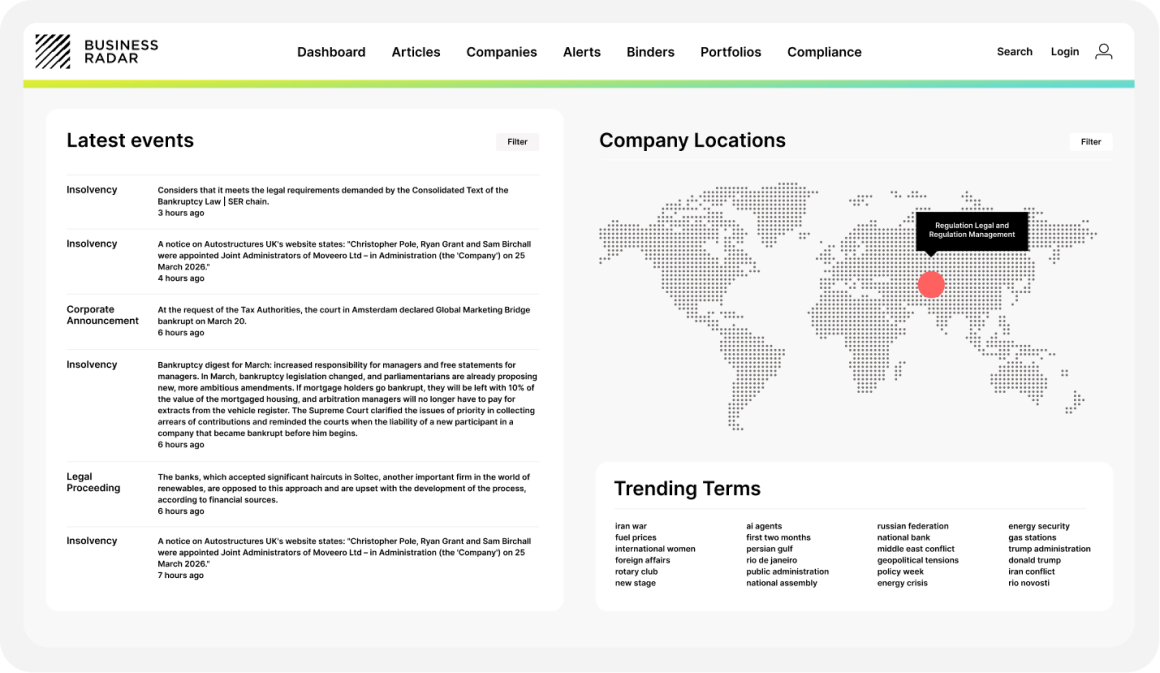
Build a materiality assessment grounded in evidence, not assumptions

CSRD's double materiality assessment must be fact-based — grounded in actual and potential impacts across your value chain, not subjective opinions. Business Radar gives you classified, scored intelligence across 210+ risk categories, mapped to ESRS sustainability topics.

  • Environmental incidents, labour violations, governance failures — classified automatically
  • Materiality-based filtering surfaces events with potential business or disclosure impact
  • Sentiment classification and relevance scoring to support impact assessment
Build a materiality assessment grounded in evidence, not assumptions
Value chain intelligence

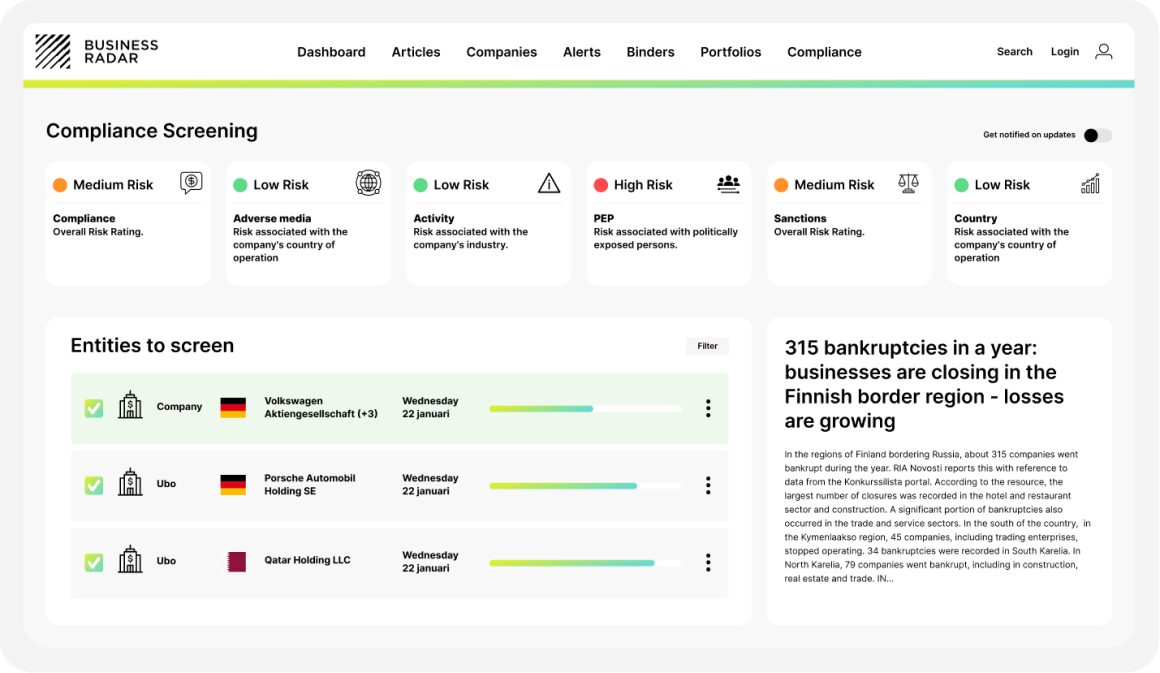
See your whole value chain, not just your direct suppliers

CSRD double materiality covers impacts across your entire value chain. Business Radar maps the companies behind your reporting scope, so the entities that carry real ESG risk do not stay hidden.

  • Corporate linkage and subsidiary mapping via Dun & Bradstreet
  • UBO data and global ownership visibility
  • Mass entity import so your full reporting scope is covered
See your whole value chain, not just your direct suppliers
Assurance-ready evidence

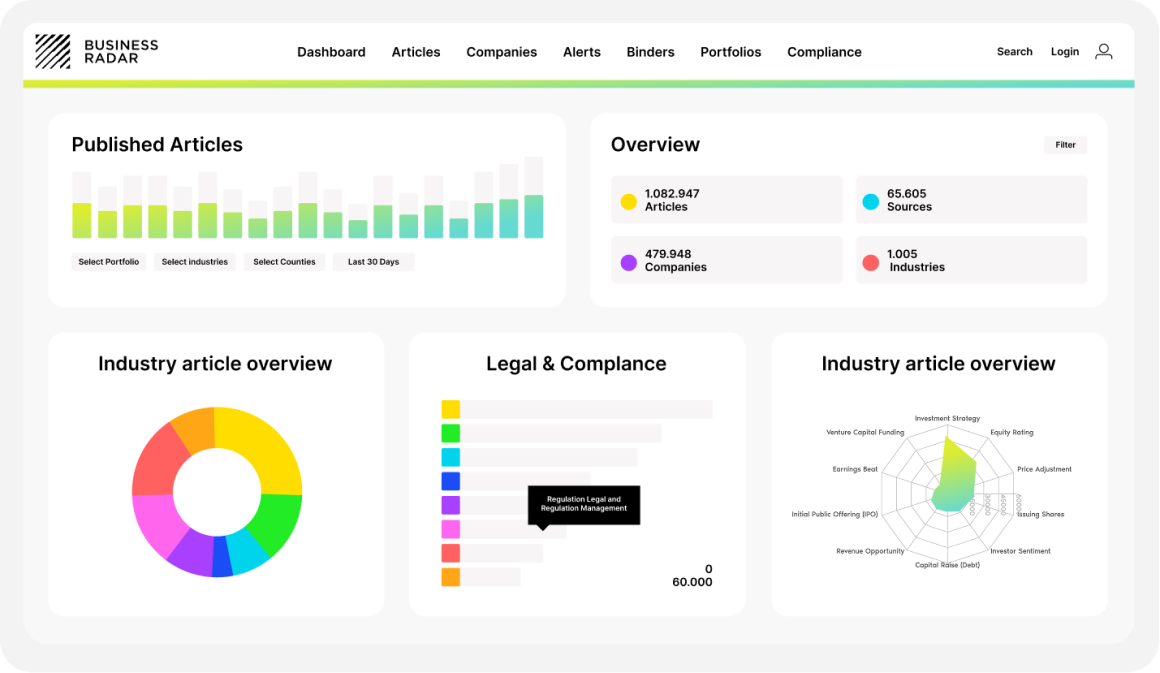
Every datapoint documented. Every source traceable.

CSRD reports go through external assurance. When assurers test your sustainability statements, Business Radar gives you the evidence behind every figure, with the date and source attached.

  • Full audit trail: timestamps, source data, risk classification
  • Exportable reports for assurance and internal records
  • A clear record of what you knew and when you knew it
Every datapoint documented. Every source traceable.

Related national frameworks

CSDDD builds on supply chain laws already in force across Europe. These apply now, independently of the CSRD timeline.

  • German Supply Chain Act (LkSG)

    In force since 2023 for companies with 1,000+ employees in Germany. Requires annual risk analyses, preventive measures, and a complaints mechanism. Applies independently until Germany confirms alignment with CSDDD scope.

  • French Duty of Vigilance

    Applies to companies with 5,000+ employees in France or 10,000+ globally. Requires a published annual Vigilance Plan covering risk mapping, supplier assessment, and a monitoring scheme.

  • UK Modern Slavery Act

    Applies to any company operating in the UK with global turnover above £36M. Requires an annual statement on steps taken to ensure modern slavery is not present in supply chains or operations.

See how we fit your CSRD programme

Whether you're building due diligence infrastructure from scratch or stress-testing what you already have, our team can walk you through how Business Radar maps to your obligations.

Frequently Asked Questions about ESG Monitoring with Business Radar

How does Business Radar support our double materiality assessment?

CSRD requires the assessment to be fact-based, grounded in actual and potential impacts rather than internal opinion. Business Radar delivers classified, scored intelligence across 210+ risk categories mapped to ESRS sustainability topics, with sentiment classification and relevance scoring, so both the impact and the financial side of materiality rest on documented evidence.

Does this cover our value chain or only direct suppliers?

Your reporting scope rarely stops at direct relationships, and neither does the monitoring. Corporate linkage and subsidiary mapping via Dun & Bradstreet, combined with UBO data, connect developments to the entities behind your value chain, so risk carried by subsidiaries and related companies does not stay hidden.

Will the evidence hold up under external assurance?

That is what it is built for. Every datapoint carries a full audit trail with timestamps, source data and risk classification, and reports are exportable for assurance and internal records. When assurers test a sustainability statement, you can show what you knew, when you knew it, and where it came from.

We are a Wave 2 company. When should we start?

Your first report covers FY2027, which makes 2026 the preparation window. A defensible double materiality assessment needs a monitoring baseline behind it, and building that baseline takes months, not weeks. Starting now means your first reporting cycle draws on a full year of structured evidence.

Does Business Radar produce the CSRD report itself?

No, and that is deliberate. Business Radar is the intelligence and evidence layer underneath your reporting: it monitors, classifies and documents the developments your materiality assessment and disclosures rest on. It works alongside your reporting tools and processes rather than replacing them.

Can we connect this to the systems we already use?

Yes. Work in the platform directly or bring signals into your own systems via the API and exports. Mass entity import means your full reporting scope can be loaded and monitored from day one instead of entity by entity.