

iClima Earth is a London-based green fintech company with one focus: the companies whose products and services can decarbonise the planet. iClima analyses which existing and upcoming technologies will have the most impact on emissions, and shares that data publicly.
To follow the more than 160 companies in its universe, iClima uses Business Radar for tailored news alerts and a daily update on its portfolio. We spoke with Gabriela Herculano, CEO and co-founder, and Gary Hart, sustainability analyst.
The client’s challenge
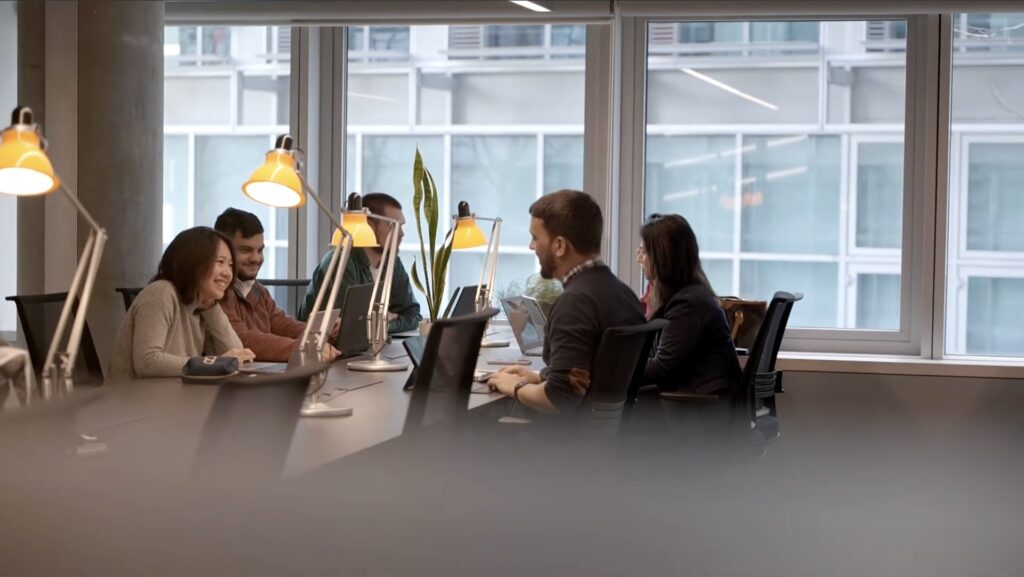
iClima follows more than 160 listed companies. Each of them has to be tracked daily: results, acquisitions, projects, partnerships. For a small team, that is a large task.
“We look at over 160 companies, and each day we need to keep up to date with the latest news and goings on,” says Gary Hart. “So it’s quite a big task, especially for one person.” Before Business Radar, staying on top of the portfolio took the team considerable time, with the risk of missing relevant developments.
The industry backdrop
iClima’s starting point is that greenwashing can be solved with data. The difficulty is that much of that data is still not reported. Since 2023, large EU companies have had to disclose under the EU Taxonomy which share of their turnover comes from environmentally sustainable activities. The EU’s Omnibus simplification narrows that obligation to the largest companies, many companies outside the EU are not covered, and there is no general obligation to report fossil or “brown” revenue.
Investors who want to judge a company’s actual climate contribution therefore have to find the evidence themselves, in news coverage and local sources. “It is about the information that we don’t have,” says Gabriela Herculano. “We need to look for that data, and that’s what Business Radar does for us.”
The solution: tailored monitoring of the full portfolio
Business Radar monitors iClima’s complete company list and delivers a daily update with the news that matters for each company. Coverage includes international and local media in several languages, so the team also sees articles it would not find through a standard web search.
A concrete example: when Chevron acquired Renewable Energy Group, a company in iClima’s index, the news was at the top of Gary Hart’s daily update. “This was a piece of news that was on top of my daily update, which I would’ve missed otherwise. It was great to have that news straight in as soon as it happened.”
Implementation and collaboration
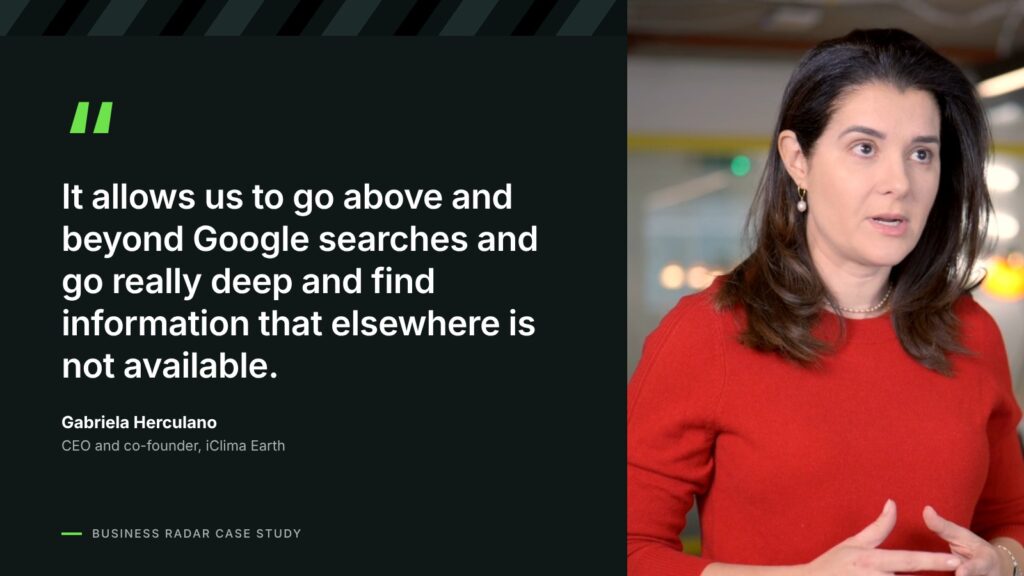
iClima has worked with Business Radar since its early days. The setup is iterative: the more specific the questions iClima asks, the better the monitoring matches the information the team needs. “The more that we ask questions, the more we’re able to extract the right information,” says Herculano. “It really sets us apart, and we really appreciate that they’ve been there for us since the very beginning.”
She also points to flexibility. Business Radar works with each client to understand which questions and which data are specific to their work, and which of those are hard to find elsewhere.
Broader relevance
iClima’s situation applies to any organisation that follows a large group of companies with a small team: impact investors, ESG analysts, index providers. Where companies do not disclose the information you need, structured news monitoring fills a large part of the gap.
“If you want to keep on top of the latest news from around the world and access articles that otherwise you might not find in different languages, it’s really convenient and helps you to keep your finger on the pulse,” says Hart.